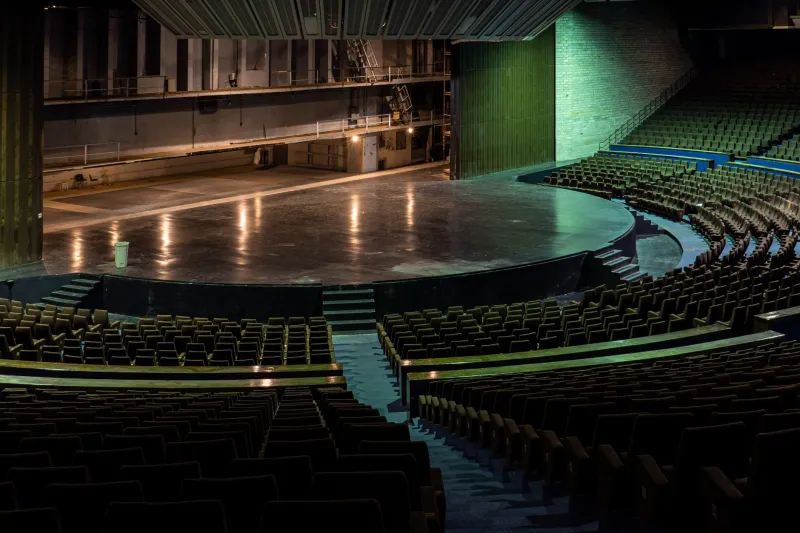
Presence Over Pixels: How Carpathian Theaters' Refusal to Stream Is Filling American Seats
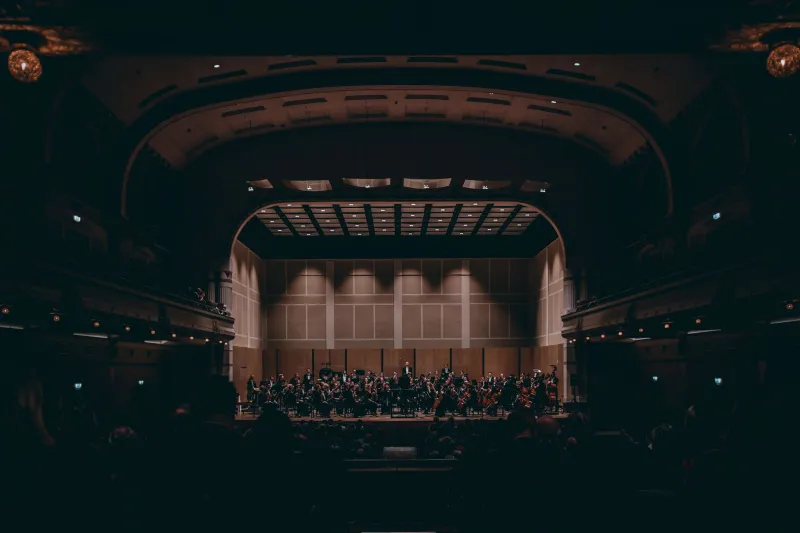
In an era when entertainment platforms compete for eyeballs through screens of every size, a number of Carpathian theater companies have made a quiet but consequential decision: they will not stream. They will not archive. They will not offer a digital alternative for those who cannot, or choose not to, attend in person. Far from limiting their reach, this deliberate analog stance has made them objects of fascination and pilgrimage for American audiences who have grown weary of mediated experience — and the implications for regional theater across the United States deserve serious examination.
The Philosophy Behind the Refusal
To understand why certain Carpathian companies reject the camera so firmly, one must first appreciate how performance is understood in the mountain theatrical tradition. For many ensembles rooted in the Prykarpattia region, a production is not a text to be recorded and distributed. It is an event — bounded by time, shaped by the specific gathering of people in a specific room, and irreversibly altered by the presence or absence of any single member of the audience. The notion that a camera might adequately capture what passes between performers and witnesses is regarded not merely as technically insufficient, but as philosophically dishonest.
This is not nostalgia. Directors and artistic leaders in this tradition articulate a coherent argument: the camera does not observe performance; it transforms it. Once a performer knows that a lens is present, the relationship between stage and house shifts in ways that are subtle but corrosive. The gaze changes. The body adjusts. The silence between moments — so carefully cultivated in Carpathian practice — becomes self-conscious rather than alive. What is recorded is not the performance. It is a performance of the performance.
What American Audiences Are Responding To
American theatergoers, particularly those who came of age during the pandemic's forced migration to digital platforms, have arrived at an unexpected conclusion: they are tired of watching. Not of theater itself, but of the specific quality of attention that a screen demands — passive, isolated, interruptible. Streaming services have delivered convenience, but they have also delivered a kind of loneliness that audiences are only now beginning to name.
This is precisely the void that the Carpathian model fills. When word spreads among American theater circles that a visiting ensemble from the Prykarpattia region will perform without any recorded documentation, something remarkable happens: tickets sell. Not in spite of the limitation, but because of it. The knowledge that this particular gathering of performers and audience members will produce something that exists nowhere else — that cannot be retrieved, rewound, or shared as a link — creates a quality of anticipation that no marketing campaign can manufacture.
Several American presenters who have hosted Carpathian companies in recent seasons have noted that post-show conversations last longer, run deeper, and generate more sustained audience engagement than comparable productions that were also livestreamed. When there is no recording to fall back on, memory becomes the only vessel. People talk because they must talk — because talking is how the experience survives.
The Practical Lessons for Regional Theater
American regional theaters face a genuine dilemma. Boards and development offices frequently advocate for digital expansion as a means of broadening reach and justifying investment. The argument is intuitive: more access means more audience, and more audience means more relevance. The Carpathian counter-argument does not deny the logic of access. It questions the definition of audience.
If an audience member watches a production alone on a laptop while folding laundry, are they experiencing theater? Or are they consuming content that happens to have originated in a theater? The distinction matters enormously, not as snobbery, but as a question of what theater is actually for. Carpathian practice insists that theater's irreplaceable function is the creation of a shared present — a room full of people agreeing, for the duration of an evening, to pay attention together. No streaming platform has yet replicated that agreement.
Regional theaters that have begun to apply this thinking — even partially, even experimentally — report surprising results. One mid-sized repertory company in the Midwest eliminated the livestream option for a single production last season, framing the decision as an artistic choice rather than a budget constraint. Advance sales increased. Press coverage, drawn to the novelty of the decision, was disproportionate to the production's scale. The absence of a digital alternative became, paradoxically, a form of marketing.
The Mountain as Metaphor
There is something instructive in the geography of this resistance. The Carpathian theatrical tradition developed in communities where travel was difficult, where performances were infrequent, and where the arrival of a company represented a genuine communal event. The rarity of performance was not a problem to be solved; it was the condition that gave performance its weight. People walked. People planned. People arranged their lives around an evening that would not come again.
American entertainment culture has spent decades eliminating friction — making every film, every concert, every performance available on demand at any moment. The result has been abundance without consequence. When everything is available always, nothing carries urgency. The Carpathian model reintroduces friction deliberately, and in doing so, reintroduces meaning.
This is not an argument against technology in the abstract. It is an argument for the strategic preservation of scarcity — for the recognition that some experiences derive their value precisely from the conditions that make them difficult to access. A mountain is worth climbing in part because it resists the climb.
A Reckoning With What Theater Is For
The American theater industry stands at a crossroads that has been arriving slowly for years and arrived all at once during the pandemic. The question is no longer whether digital platforms will play a role in how performance reaches audiences. They will. The question is whether theaters will allow digital expansion to redefine what theater fundamentally is.
Carpathian companies, working from a tradition that predates the internet by several centuries, offer a perspective that is neither reactionary nor romantic. It is, rather, a principled insistence on what live performance can do that no other medium can replicate: it can make a room full of strangers feel, briefly and genuinely, that they are somewhere together. That is not a small thing. In an increasingly fragmented cultural landscape, it may be the most important thing theater has left to offer.
The algorithm will always win the competition for convenience. It will never win the competition for presence. Carpathian theater has known this for a long time. American stages are beginning to remember it.