Altitude and Artistic Renewal: Why American Theater Directors Are Heading to the Carpathians to Find Themselves Again
The American theater industry is, by most honest accounts, exhausting. Seasons are packed tightly from September through June. Regional artistic directors manage productions, fundraising campaigns, board relations, and community programming simultaneously. Off-Broadway and nonprofit companies operate under perpetual financial strain. The creative professional who entered the field with a burning sense of artistic purpose often finds, somewhere around their tenth or fifteenth year, that the flame has dimmed considerably.
Burnout in the performing arts is not a new conversation. What is new, however, is where a growing number of American directors are choosing to address it — not in a Vermont cabin or a California wellness retreat, but in the mountain communities of the Carpathian region, where the performing arts are not a product to be marketed, but a living expression of collective memory.
The Landscape as Teacher
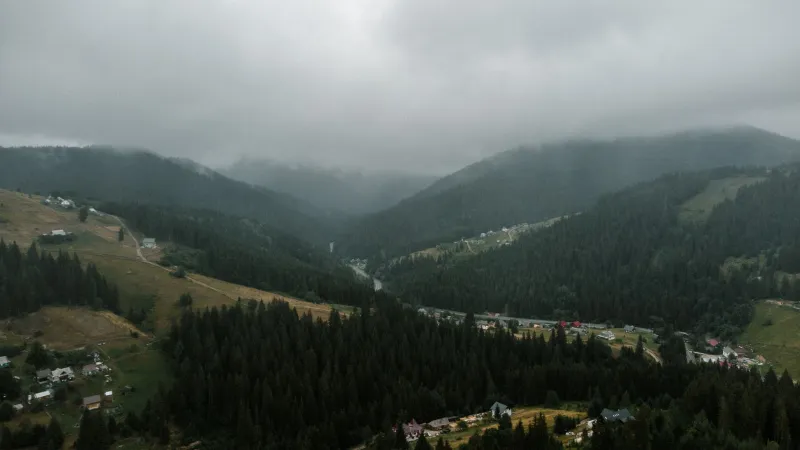
The Carpathian Mountains stretch across a broad arc of Central and Eastern Europe, encompassing parts of Ukraine, Slovakia, Poland, Romania, and Hungary. The region known as Prykarpattia — the foothills and valleys lying at the western edge of Ukraine — has become a particular destination for artists seeking something they struggle to name precisely, but describe consistently as depth.
Director Mara Ellison, who leads an ensemble theater company in Chicago, spent six weeks in a village outside Ivano-Frankivsk following what she describes as the most difficult season of her professional life. "I had directed eight productions in fourteen months," she recalls. "I knew the mechanics of everything I was doing. I had completely lost the reason for any of it."
What she encountered in the Carpathian foothills was, in her words, disorienting at first. "The pace is genuinely different. Not slower in a lazy sense — people there work very hard. But there is a relationship to time that doesn't treat urgency as a virtue. I had to unlearn a great deal before I could start learning anything new."
The landscape itself plays a role that practitioners find difficult to dismiss. The mountains impose a certain scale on human activity. The valleys hold fog in the mornings. The forests are old and dense. Several directors who have undertaken residencies in the region independently describe a similar phenomenon: the physical environment begins to affect their thinking about stage space, about what deserves attention, about what a production actually needs to contain.
Cultural Traditions That Refuse Commodification
Beyond the geography, it is the cultural life of Carpathian communities that tends to make the deepest impression on visiting artists. The region maintains performance traditions — ritual songs, seasonal celebrations, oral storytelling, and communal dramatic forms — that have persisted across centuries of political upheaval and cultural suppression. These are not museum pieces. They are practiced by living communities for their own purposes, not for the benefit of outside observers.
Jordan Vasquez, a New York-based director who has worked extensively in experimental theater, spent three months in the Prykarpattia region as part of an informal artistic exchange facilitated through a network of Eastern European theater educators. He was particularly struck by the function that performance serves in the communities he visited.
"In New York, we talk constantly about making theater that matters, that connects, that serves the community," he says. "In the villages I spent time in, no one needed to have that conversation. It was simply understood. The performance was part of the social fabric, not a product being offered to a demographic."
This observation — that Carpathian performance traditions are intrinsically communal rather than commercially oriented — recurs frequently among American directors who have spent meaningful time in the region. For professionals whose daily work is filtered through the language of ticket sales, grant applications, and audience development metrics, encountering an artistic culture that operates on entirely different terms can be profoundly recalibrating.
What Returns to the American Stage
The question of whether these experiences translate into measurably different work back in the United States is, admittedly, difficult to quantify. Directors themselves are cautious about making direct causal claims. Nevertheless, the testimony is consistent enough to warrant serious attention.
Ellison's first production after returning from the Carpathians was a revival of a mid-century American drama that her company had scheduled before her departure. "I came back with completely different instincts about the silences in the play," she says. "About what the actors needed to carry physically. About what the set did not need to say. My assistant director told me afterward that she had never seen me work with so much patience in the room."
Vasquez speaks of a more fundamental shift in his relationship to the rehearsal process. "I had been directing as a problem-solver for years. Every rehearsal was about fixing things, tightening things, making things more effective. After the Carpathians, I started thinking about rehearsal as a space for discovering things. That sounds like a small difference. It is not a small difference."
Other directors describe changes in how they approach design collaboration, how they speak to actors about emotional memory and physical presence, and how they make decisions about what a production's central question actually is — as opposed to what its central message is intended to be.
The Residency Model Taking Shape
While many of these sojourns have been self-organized and informal, a more structured residency model is beginning to emerge. Several cultural organizations in the Prykarpattia region have begun hosting international artists in arrangements that combine periods of unstructured rest with opportunities to observe and participate in local rehearsal processes, folk performance traditions, and intergenerational cultural transmission.
These programs are not, it should be noted, designed as theatrical tourism. They require a genuine commitment of time — typically a minimum of four to six weeks — and a willingness to engage seriously with the host community's cultural life rather than observe it from a comfortable distance. The directors who speak most meaningfully about their experiences are those who arrived with few expectations and remained long enough for the novelty to wear off and the actual learning to begin.
An Antidote Worth Considering
The American theater industry will not solve its burnout crisis through mountain retreats alone. Structural issues of funding, labor, and institutional culture require structural solutions. But the directors returning from the Carpathians are not claiming to have found a cure for the industry's systemic problems. They are claiming something more personal and, in its own way, more durable: a renewed understanding of why the work matters.
In a professional culture that frequently confuses productivity with vitality, that understanding — recovered in the fog of a Carpathian valley or in the rehearsal room of a village ensemble — may be precisely what is needed to sustain a life in the theater over the long term.
The mountains have been there for a very long time. They have seen empires rise and collapse, languages suppressed and recovered, traditions buried and exhumed. They are, in their way, patient teachers. American directors, it seems, are beginning to arrive as willing students.