The Dignity of the Unfinished: What Carpathian Theater Knows About Failure That American Stages Have Forgotten

There is a word used in certain Carpathian theatrical circles—roughly translated as nedorobyty, meaning something akin to "the productive incompleteness"—that has no precise equivalent in the American theater lexicon. That absence is telling. In the United States, a theatrical production is expected to arrive fully formed on opening night, polished to a high gloss, ready to be reviewed, monetized, and either celebrated or buried within the span of a single weekend. The notion that a work might still be discovering itself in front of a live audience is treated less as an artistic philosophy and more as an admission of organizational failure.
Carpathian theater tradition sees things differently. And American regional theater, burdened by rising production costs, shrinking subscription bases, and a critical culture that rewards spectacle over sincerity, would do well to pay attention.
A Culture Built on Creative Risk
The theatrical heritage of the Carpathian region—spanning the mountain communities of western Ukraine, southern Poland, northeastern Slovakia, and northern Romania—did not develop under the conditions of commercial theater. It grew from ritual, from seasonal performance, from community storytelling that served social and spiritual functions long before box office receipts entered the picture. Failure in that context was not catastrophic. It was instructive. A performance that fell flat during a village festival was not shuttered; it was discussed, adjusted, and attempted again.
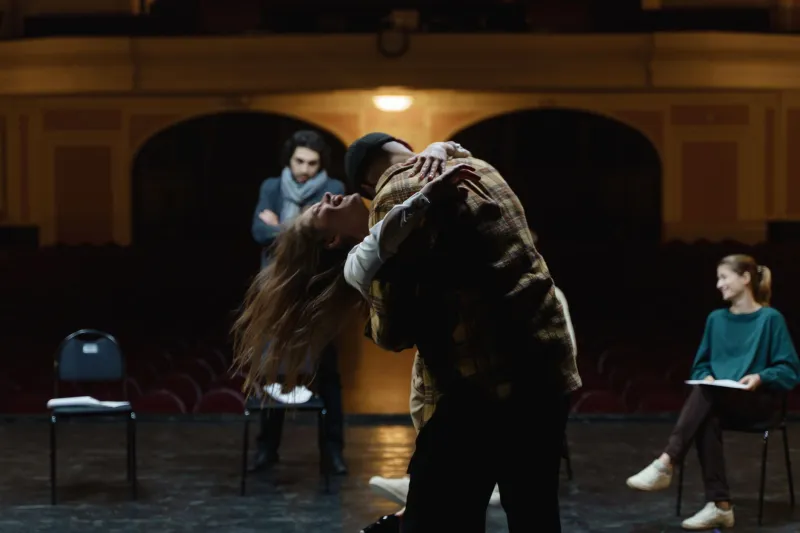
This iterative sensibility carried forward into the more formal theatrical institutions that emerged throughout the twentieth century. Carpathian companies, particularly those operating in the western Ukrainian tradition, developed a rehearsal culture that treated public showings not as previews to be nervously managed but as genuine creative events in their own right. Audiences were invited into the process. Their reactions—confusion, laughter in unexpected places, visible disengagement—were considered data rather than verdicts.
The result was a theatrical ecosystem in which artists were permitted, even encouraged, to take risks that might not pay off immediately. The long view was always assumed. A production might require three seasons to find its full form. That was not considered a failure. It was considered development.
The American Obsession With the Flawless Premiere
Contrast that with the pressure environment that defines most American regional theater today. A mid-sized company in, say, Minneapolis or Atlanta typically commits its season budget months in advance, builds marketing campaigns around opening night, courts major donors with promises of polished product, and then absorbs the consequences—financially and reputationally—when a production underperforms against those expectations.
The critical infrastructure reinforces this dynamic. American theater reviewers, even those writing for regional publications, tend to attend performances within the first week of a run. Their assessments, however thoughtfully written, function as early verdicts that shape audience attendance for the remainder of the run. A production that needed another month of performance to truly come alive may never get that month, because the review cycle has already moved on.
This system creates a particular kind of institutional timidity. Artistic directors, however bold their personal visions, must constantly weigh creative ambition against the risk of a high-profile stumble. The result is programming that skews toward the familiar, the pre-proven, the safe. New works by emerging playwrights—precisely the kind of writing that requires the most developmental patience—are often the first casualties of a risk-averse season-planning process.
What "Failure-Forward" Actually Looks Like in Practice
Adopting a Carpathian-influenced approach to artistic risk does not mean abandoning professional standards or presenting underprepared work to paying audiences. It means reframing the relationship between process and product in ways that are both philosophically honest and practically achievable.
Several American companies have already begun moving in this direction, though rarely under that explicit framing. The practice of extended workshop productions—where a new play is performed multiple times for invited audiences before formal reviews are permitted—borrows directly from this iterative logic. So does the growing trend of post-show conversations, which invite audiences into the artistic process rather than positioning them purely as consumers of a finished object.
What Carpathian tradition adds to these existing practices is a deeper cultural permission to be unfinished. In the mountain theater tradition, the audience is understood to be a collaborator, not a customer. Their presence at an imperfect performance is not a breach of contract; it is an act of participation in something that is still becoming. That reframing has profound implications for how American companies might communicate with their audiences about new and experimental work.
Imagine a regional theater that explicitly marketed a new production as a work in development—not as a hedge against poor reviews, but as a genuine invitation to witness artistic discovery. Imagine season subscriptions that included access to rehearsal showings, work-in-progress performances, and post-process discussions with the creative team. These are not radical innovations. They are, in many respects, simply American translations of practices that Carpathian theater communities have sustained for generations.
The Financial Case for Embracing Imperfection
There is also a pragmatic argument here that deserves direct attention. The cost of chasing the perfect premiere is not merely artistic; it is financial. The resources required to bring a production to opening-night polish—extensive technical rehearsals, elaborate design elements, aggressive marketing campaigns—represent a significant portion of most regional theater budgets. When those productions underperform, the losses are correspondingly significant.
A model that builds developmental performance into the production process, by contrast, allows companies to spread risk across time. A work that receives three or four public showings before formal opening night has already generated some revenue, gathered genuine audience feedback, and given the creative team the opportunity to refine their work under performance conditions. The opening night, when it arrives, is the result of a genuine process rather than a high-stakes gamble.
This approach also creates new opportunities for audience engagement. American theatergoers, particularly younger ones, have demonstrated consistent appetite for behind-the-scenes access, process-driven content, and participatory cultural experiences. The Carpathian model, which treats the audience as a witness to creative development rather than a recipient of finished product, aligns naturally with these preferences.
Relearning What Theater Is For
At its deepest level, the Carpathian approach to failure is not really about failure at all. It is about a fundamentally different understanding of what theater is for. In the mountain tradition, performance is not primarily a product to be delivered. It is a communal act to be undertaken—imperfectly, honestly, and in full view of the people for whom it is intended.
American theater, at its best, has always known this too. The pressure to perform perfection has never entirely extinguished the communal impulse that draws people to the stage in the first place. What Carpathian tradition offers is not a foreign philosophy to be imported wholesale, but a reminder of something that was always present in the theater's deepest instincts—the understanding that the work is never truly finished, and that this incompleteness is not something to apologize for.
It is, in fact, the whole point.