The Art of Restraint: How Carpathian Theater's Philosophy of Deliberate Emptiness Is Changing the American Season
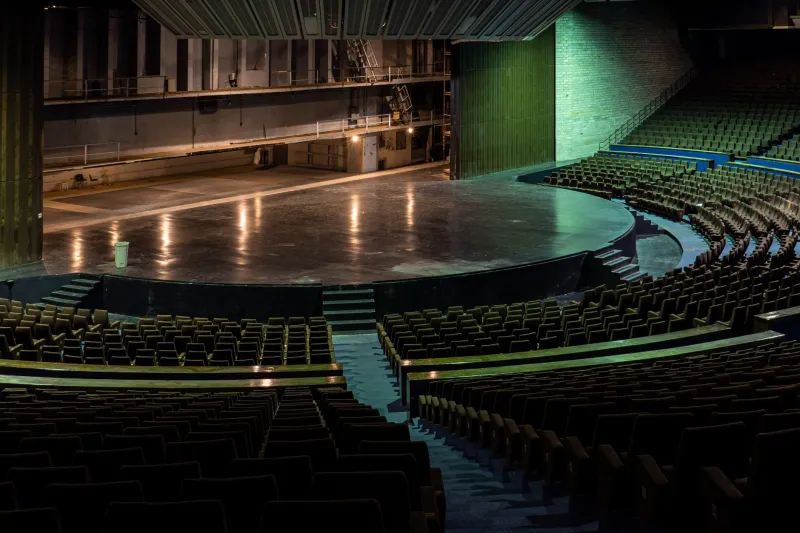
There is a concept embedded deep within Carpathian theatrical practice that does not translate neatly into English — not because the language lacks the words, but because the culture lacks the habit. It is the idea that what a theater chooses not to do is as consequential as anything it places on stage. In the mountain communities of western Ukraine and the broader Carpathian region, this principle of deliberate, breathing space — of trusting the pause, the gap, the intentional absence — has shaped performance traditions for generations. Now, with quiet but unmistakable momentum, it is beginning to reshape the American theatrical season.
A Culture Built on Accumulation
To understand why this principle carries such force in an American context, one must first reckon honestly with the cultural pressures that govern theater production in the United States. Regional theaters from Minneapolis to Atlanta operate under a logic of perpetual expansion: more productions, more programming, more outreach events, more educational initiatives, more content across more platforms. Boards of directors measure institutional health in volume. Grant applications reward ambition defined as scale. Marketing departments equate a packed season calendar with organizational vitality.
The consequences of this compulsion are well documented among theater professionals, even if they are rarely discussed openly with the public. Casts and crews are stretched thin. Rehearsal periods are compressed. Design elements that deserve weeks of development receive days. Productions that might have achieved genuine distinction are instead pushed through a pipeline optimized for throughput rather than depth. The result, all too often, is a season that feels busy but not memorable — a succession of competent performances that leave audiences entertained but unmoved.
What the Mountains Teach
Carpathian theatrical philosophy emerged from conditions that demanded a fundamentally different calculus. In communities where resources were scarce and performance traditions were carried across generations through oral transmission and embodied practice, the question was never how many productions could be mounted in a given year. The question was which single performance, which essential ritual enactment, which carefully preserved story deserved the full weight of collective attention.
This orientation produced what scholars of Eastern European performance studies have described as a culture of theatrical consecration — the treatment of each production as an event of genuine communal significance rather than a scheduled entry in a rotating repertoire. Within this framework, the period between productions is not dead time. It is preparation time. It is reflection time. It is, in the truest sense, breathing space: the interval that allows both artists and audiences to absorb what has been witnessed before new material is introduced.
The Carpathian director's instinct is not to fill this space but to protect it — to resist the institutional anxiety that interprets emptiness as failure and instead to regard it as the necessary condition for the next work's integrity.
American Theaters That Are Listening
Several American regional companies have begun translating this philosophy into concrete programming decisions, often after direct engagement with Carpathian theater practitioners through residency programs, international festivals, or collaborative productions.
One mid-sized theater in the Pacific Northwest reduced its annual season from seven productions to four several years ago, following a workshop led by a Ukrainian director with deep roots in Carpathian ensemble practice. The artistic director has spoken publicly about the skepticism she faced from her board and from longtime subscribers accustomed to a fuller calendar. What followed surprised even her most enthusiastic supporters: ticket sales per production increased, post-show audience discussions grew longer and more substantive, and the company received its first national critical recognition in over a decade.
Similar patterns have emerged at companies in New England and the upper Midwest, where theaters experimenting with reduced, more intentional seasons have reported not only stronger artistic outcomes but measurably higher rates of subscriber renewal. Audiences, it appears, respond to the implicit message that a theater has made a genuine choice — that a production has been selected and developed with care rather than scheduled to fill a slot.
The Discipline of Saying No
What makes the Carpathian principle genuinely challenging for American institutions to adopt is that it requires a form of organizational courage that runs against every instinct the nonprofit theater sector has cultivated. Saying no to a production means saying no to revenue, to grant eligibility, to the appearance of momentum. It means tolerating the discomfort of an empty month on the season calendar and trusting that the audience will understand this silence as intention rather than absence.
Carpathian theatrical tradition offers a useful reframe for this discomfort. In the folk performance practices of the Hutsul and Boyko peoples of the Carpathian highlands, the interval between major ceremonial performances was never regarded as a lapse. It was understood as the period during which the community digested meaning, during which the performers deepened their preparation, and during which the anticipation that gives live performance its irreplaceable charge had the opportunity to build. The next performance arrived not as the next item on a list but as an event that had been genuinely awaited.
This is the emotional architecture that American theaters are beginning to recognize as both philosophically sound and practically effective. An audience that has been made to wait — not arbitrarily, but meaningfully — arrives with a quality of attention that no marketing campaign can manufacture.
Redefining Institutional Success
Perhaps the most significant implication of the Carpathian breathing space principle is the challenge it poses to the metrics by which American theaters measure and communicate their own worth. If success is not defined by volume of production, what replaces it? The answer that Carpathian theatrical philosophy suggests is deceptively simple: the depth of impact per performance, the degree to which a single production alters the way an audience understands something about the world, and the longevity of the conversation that a work initiates.
These are harder things to quantify than ticket counts and production numbers. They require a different kind of institutional vocabulary — one that American theaters are only beginning to develop. But the early evidence from companies willing to experiment with restraint suggests that audiences are capable of recognizing and rewarding this shift, often more readily than the institutions themselves anticipated.
A Quieter Kind of Ambition
The Carpathian theatrical tradition has never been interested in spectacle for its own sake. Its ambitions have always been of a different order: to make something true, to make it with full attention, and to trust that truth, carefully delivered, will find its way to those who need it. This is not a modest ambition. It is, in its own way, a more demanding one than the ambition to produce more.
As American theaters continue to absorb the lessons of this tradition, the most important shift may be conceptual rather than logistical. It is the recognition that a theater's power lies not in how much it offers but in how fully it commits to what it chooses to offer — and in the courage to let everything else wait.