Less Spectacle, More Soul: How One American Festival Found Its Future in Carpathian Simplicity
There is a particular kind of courage required to walk away from everything a theater has been told it needs. No elaborate scenic constructions. No imported star power. No subscription-season logic that demands a crowd-pleasing musical anchor every eighteen months to keep the lights on. For the Ridgeline Theater Festival, based in Asheville, North Carolina, that act of subtraction began not with a financial crisis — though those have come and gone — but with a question that artistic director Mara Hollenbeck found herself unable to stop asking: Why are our most expensive productions the ones audiences remember least?
The answer, she would eventually discover, had been waiting for her in the mountain theater traditions of the Carpathian region of Eastern Europe.
A Festival at a Crossroads
Founded in 2009 as a mid-sized summer festival drawing heavily from the American regional theater playbook, Ridgeline had built its reputation on a familiar formula — a Shakespeare, a new American work, and a crowd-pleasing revival anchored by one or two recognizable names. For several years, the model held. Then, slowly, it didn't.
"We were producing work that looked right," Hollenbeck says, speaking from the festival's modest administrative offices near downtown Asheville. "The sets were beautiful. The costumes were well-funded. And somehow the work felt... managed. Like we were producing the idea of theater rather than theater itself."
Attendance plateaued. Critical response grew polite rather than passionate. The board began asking questions that boards ask when growth stalls. Hollenbeck began asking a different set of questions entirely.
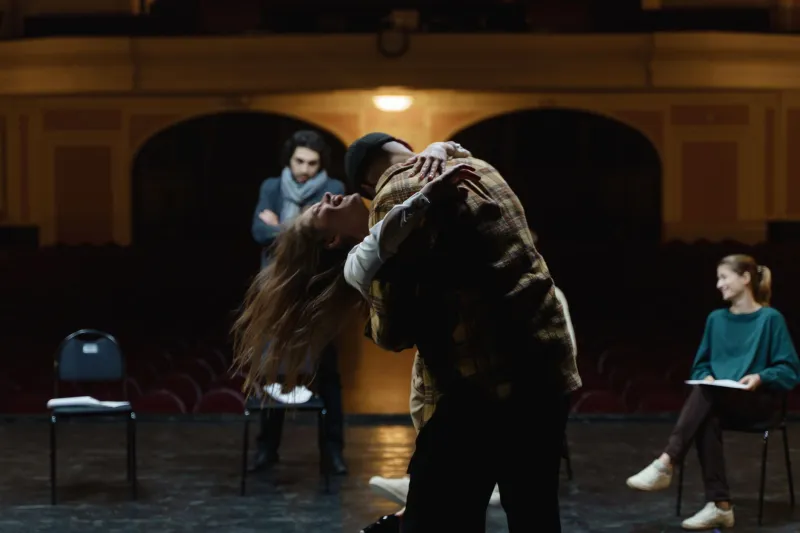
Her turning point came during a 2021 cultural exchange residency that brought a director from the Ivano-Frankivsk region of western Ukraine — the heart of the Prykarpattia — to Asheville for a six-week collaboration. What that director, Bohdan Kovalenko, modeled in the rehearsal room was, by conventional American standards, almost aggressively minimal. No concept decks. No production meetings dominated by technical departments. Actors were asked to work on bare floors, to use their bodies as primary instruments of meaning, and to treat the text not as a script to be executed but as a landscape to be inhabited.
"Bohdan kept saying, 'The story knows how to walk — your job is not to carry it,'" Hollenbeck recalls. "It took me several weeks to understand what he meant. And when I did, I couldn't go back."
The Carpathian Principle in Practice
Carpathian theatrical tradition — rooted in centuries of folk performance, ritual drama, and community storytelling — operates from a foundational premise that much of contemporary American theater has quietly abandoned: that an audience brings its imagination to the theater, and that the theater's highest function is to activate that imagination rather than replace it.
In practice, this translates into a set of production values that look, on paper, like austerity but feel, in performance, like abundance. Minimal scenic elements selected for symbolic rather than representational weight. Ensemble-driven casting that prizes the chemistry of a company over the marketability of individual names. Rehearsal processes that are long, exploratory, and resistant to the kind of technical-production pressure that tends to dominate American production timelines.
For Ridgeline's 2022 summer season — the first shaped explicitly by these principles — Hollenbeck made decisions that her board initially regarded with significant skepticism. The festival's main-stage production, a new adaptation of a Ukrainian folk drama sourced from the Carpathian oral tradition, was staged on a nearly empty platform with three wooden chairs, a length of undyed linen, and lighting designed to evoke firelight. The cast was drawn almost entirely from local and regional actors, supplemented by two ensemble members who had trained in Eastern European physical theater traditions.
The production sold out its entire run. It was extended twice.
Community as Collaborator
What Hollenbeck and her team discovered — and what Carpathian theatrical practice has long understood — is that community-driven casting is not a compromise but a deepening. When the faces on stage are recognizable, when the voices carry regional accents and local histories, the relationship between performer and audience shifts from transaction to communion.
"There's a woman in our ensemble now, Darlene Reeves, who has lived in this region her whole life," Hollenbeck says. "She's not a trained actor in the conventional sense. But when she stands on that stage and speaks, there is something in the room that no amount of professional polish can manufacture. The audience feels known by her. And that feeling is the whole point."
This is, in essence, the Carpathian model: theater made by and for a specific community, rooted in the stories and bodies of the people who live within reach of the stage. It is a model that American regional theater once embraced more fully — before the professionalization of the nonprofit sector, before the reign of the LORT contract, before the cultural logic of imported celebrity came to dominate artistic decision-making.
The financial implications have been, by Ridgeline's account, quietly transformative. Production budgets for the 2022 and 2023 seasons ran at roughly 60 percent of their pre-pivot averages. Ticket revenue, driven by extended runs and word-of-mouth energy that Hollenbeck describes as unlike anything the festival has previously generated, has more than compensated for any reduction in grant funding tied to larger production ambitions.
A Quiet Shift Across the Sector
Ridgeline is not alone in this recalibration. Conversations with artistic leaders at regional theaters across the country — in cities including Portland, Oregon; Columbus, Ohio; and Burlington, Vermont — suggest that a quiet but meaningful reorientation is underway. The specific vocabulary varies. Some speak of "ensemble-centered practice." Others reference "resource-conscious production design" or "community-embedded casting." But the underlying impulse is recognizable: a growing conviction that the field's long investment in the apparatus of spectacle has come at a cost to the thing that makes theater irreplaceable.
Whether or not these theaters would frame their thinking in terms of Carpathian tradition, the principles they are discovering align with what mountain theater practitioners in Eastern Europe have preserved through decades of political suppression, economic constraint, and cultural marginalization. Necessity, in that context, became philosophy. Philosophy, it turns out, travels.
What the Mountain Teaches
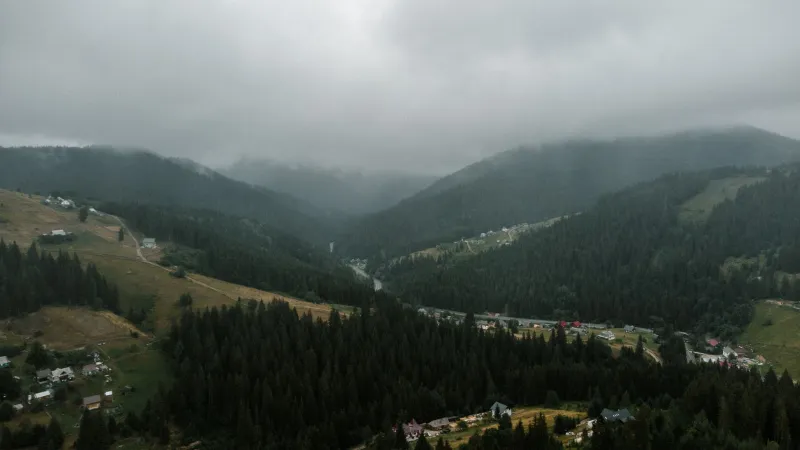
Mara Hollenbeck returned from a brief research trip to the Prykarpattia region last spring with a notebook full of observations and a revised understanding of what her festival is for. She visited village performances staged in open fields and community halls. She watched rehearsals conducted without a single piece of technical equipment. She saw audiences — farmers, teachers, young people who had grown up with these stories — weep and laugh and sit in silence with the particular quality of attention that theater, at its best, produces.
"It wasn't nostalgia," she says carefully. "It wasn't primitive. It was concentrated. Every element on that stage was there because it had earned its place. There was nothing to hide behind and nothing to distract from. Just the story and the people telling it."
For a generation of American theater-makers increasingly uncertain about the value proposition of live performance in a media-saturated culture, that concentration may be precisely the quality worth pursuing — not by impoverishing the art form, but by clarifying it. The Carpathian tradition suggests that the path to an audience's deepest engagement does not run through the technical department. It runs through the human being standing in the light, with nothing between them and the story but the willingness to be fully present.
Ridgeline's next season opens in June. The main stage will, once again, be nearly empty. The house, Hollenbeck expects, will be full.