Held by the Mountain: How Carpathian Theater Transforms Grief Into a Collective Act
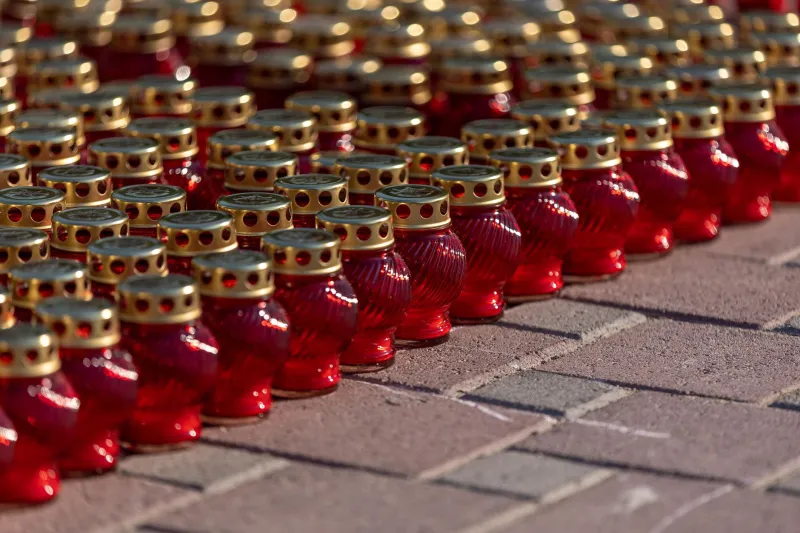
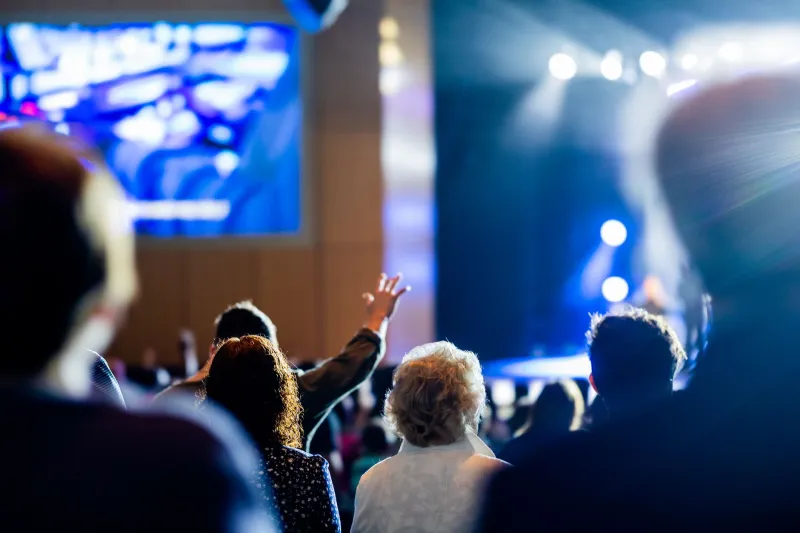
There is a particular kind of silence that settles over a Carpathian stage when a character departs for the last time. It is not the silence of an audience waiting for the next scene. It is something older — a held breath that belongs equally to the performers and the people watching, a silence that the community has learned, over generations, to inhabit together. For those who have witnessed this in person, the experience is difficult to describe to someone who has only encountered grief on the American stage, where death is so often treated as a dramatic event rather than a human one.
The distinction matters. And increasingly, it is drawing the attention of theater artists across the United States.
What Mountain Communities Know About Farewell
In Carpathian theatrical tradition, the handling of loss is inseparable from the community's relationship with the natural world. The mountains — their permanence, their indifference, their occasional violence — have long provided both the backdrop and the philosophical framework for how highland peoples process mortality. Theatrical forms that emerged from these communities did not treat death as a rupture in the narrative. They treated it as a threshold, one that required careful, collective crossing.
Ritual lament, known in various forms across Ukrainian, Hutsul, and broader Carpathian folk traditions, was never purely a private expression of sorrow. It was a performance — structured, often sung, and conducted before witnesses. The mourner was not alone in her grief; the community gathered to hold it with her. Theater, in this context, was not a metaphor for mourning. It was mourning, made visible and shared.
"When we speak of Carpathian theater and grief, we are not speaking of representation," says one director affiliated with a Ukrainian ensemble who has spent several years bringing mountain performance traditions to residencies in the American Midwest. "We are speaking of enactment. The stage becomes a space where the community agrees, together, to feel something that would otherwise be too heavy for any single person to carry."
The American Stage and Its Discomfort With Endings
By contrast, American theatrical culture has long had a complicated relationship with grief. The dominant conventions of Broadway and regional theater tend to frame loss as a catalyst — something that propels characters toward transformation, revelation, or resolution. Death, when it appears, is typically followed by meaning. The audience is invited to understand why it happened, what it signifies, how it fits into the larger arc.
This is not without value. But it can leave audiences — particularly those who have experienced loss that resists neat interpretation — feeling that the stage has offered them a story rather than a container.
The COVID-19 pandemic brought this limitation into sharp relief. American communities lost neighbors, parents, colleagues, and friends at a scale and pace that outstripped the usual cultural mechanisms for mourning. Memorial services were cancelled or held over video calls. Funerals were abbreviated. The rituals that ordinarily help communities process collective loss were, for a time, simply unavailable. Theaters, when they eventually reopened, found themselves facing audiences who were carrying grief that had nowhere to go.
"We had people coming to performances who hadn't cried yet," recalls one artistic director at a regional theater in the Pacific Northwest who asked to remain unnamed while her company's programming is still in development. "Not because they weren't sad, but because they hadn't had a proper place to be sad. We realized we didn't really know how to give them that."
Learning a Different Grammar of Loss
It was this recognition that led her ensemble to begin studying Carpathian theatrical approaches to mourning in earnest. Through a series of workshops conducted in partnership with performers trained in Ukrainian folk theater traditions, the company began developing a production that drew directly on the structure of ritual lament — its repetitions, its communal call-and-response patterns, its refusal to rush toward resolution.
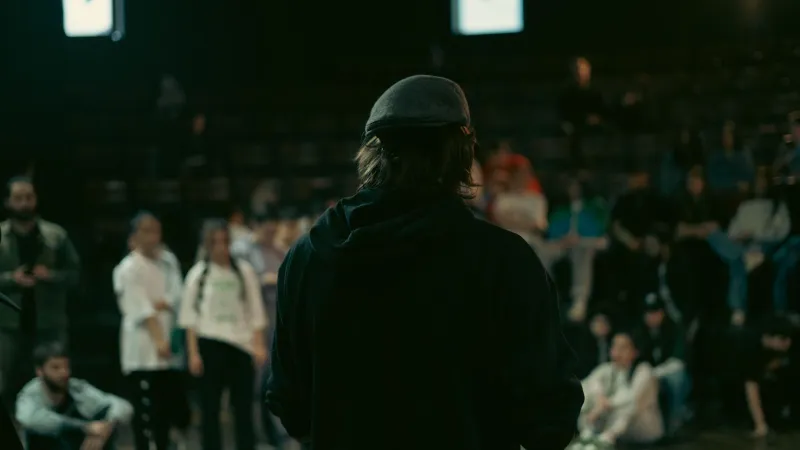
The result, staged as a site-responsive work in a converted warehouse space, was unlike anything the company had previously produced. There was no plot in the conventional sense. There were figures, voices, and movement — and a formal space for the audience to remain with what they were feeling rather than being guided away from it.
"Carpathian tradition understands that grief has a shape," the director explains. "It doesn't end when the performance ends. The performance simply gives it a form that the community can recognize and share. That's a profound gift."
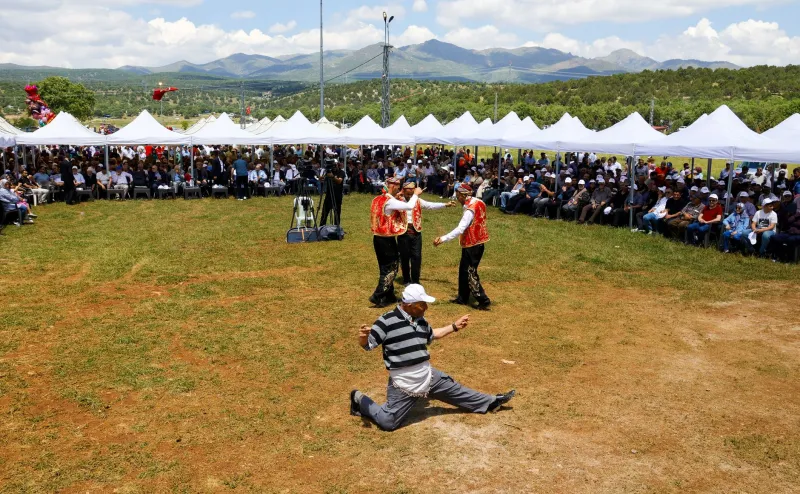
This structural insight — that theater can function as a container rather than a narrative — appears repeatedly in conversations with artists who have engaged seriously with Carpathian mourning traditions. The Hutsul practice of extended communal gathering after a death, in which stories are told, songs are sung, and the deceased is kept present through performance and memory, offers a model that several American ensembles have begun adapting for contemporary secular contexts.
Ritual Without Religion, Ceremony Without Prescription
One of the practical challenges American theaters face in adopting these approaches is the question of religious and cultural specificity. Carpathian mourning rituals are often deeply rooted in Orthodox Christian practice or pre-Christian spiritual frameworks that may not translate directly to diverse American audiences. The risk of cultural appropriation is real, and responsible practitioners are careful to acknowledge it.
However, several directors and scholars argue that the underlying theatrical structure — the use of repetition, communal voice, physical gesture, and deliberate pacing to create a shared emotional space — is separable from its specific religious content, and can be employed in ways that honor the originating tradition without claiming to replicate it.
"We are not pretending to be Carpathian," says one theater educator who has incorporated mountain mourning traditions into a graduate acting curriculum at a university in the American South. "We are learning from a tradition that has solved a problem we haven't. The problem of how to grieve in public, with dignity, without rushing to feel better."
This distinction — learning from rather than appropriating — is one that practitioners emphasize consistently. The most effective American productions drawing on Carpathian grief traditions tend to be those developed in genuine dialogue with artists from the originating cultures, rather than those that treat mountain ritual as aesthetic material to be borrowed at will.
The Stage as Sacred Ground
What Carpathian theater ultimately offers, for those willing to receive it seriously, is a reconsideration of what the stage is for. In the highland tradition, the performance space is not primarily a site of entertainment or even of art in the contemporary Western sense. It is a place where the community gathers to do something necessary — to name what has been lost, to speak it aloud, to be witnessed in the act of letting go.
American theater, at its most ambitious, has always aspired to something similar. The difference is that Carpathian tradition has never lost sight of the practical, communal function that ceremony serves. Grief, in the mountain understanding, is not a private psychological state to be managed. It is a shared human experience that requires a shared human response.
The stage, when it is used with this intention, becomes something more than a venue. It becomes, as it has been in the Carpathians for centuries, a place where a community agrees to hold one another — through darkness, through silence, through the long and necessary work of saying goodbye.