No Walls, No Problem: What Carpathian Village Theater Teaches America About Performing Without a Building
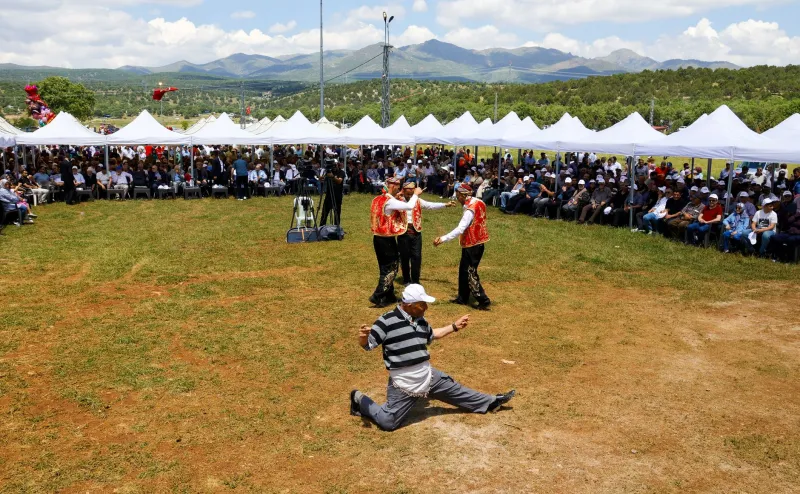
There is a particular kind of freedom that arrives only when you have nothing left to lose — no lease to renew, no landlord to appease, no heating system to repair before opening night. For generations of Carpathian mountain villagers, that freedom was not the result of misfortune. It was a design choice, arrived at through centuries of collective wisdom about what theater actually requires to be theater.
The answer, it turns out, is far less than most American companies currently believe.
The Stage Was Always Everywhere
In the Carpathian region — spanning parts of present-day Ukraine, Poland, Slovakia, and Romania — the theatrical impulse was never separated from the landscape it inhabited. Long before the concept of a purpose-built performance space reached the mountain villages of Prykarpattia, communities were staging dramatic ritual, seasonal ceremony, and narrative performance in the spaces they already occupied.
The village square served as the default amphitheater. Church steps became prosceniums for mystery plays tied to the liturgical calendar. Forest clearings, particularly those already holding cultural or spiritual significance, hosted performances that blurred the boundary between drama and communal rite. Rivers and hillsides were incorporated not as scenic backdrops but as active dramaturgy — the geography itself became a participant in the storytelling.
This was not improvisation born of poverty. It was a sophisticated and deeply considered relationship between performance and place. Carpathian theatrical traditions held that a story told in the landscape where it originated carried a resonance that no interior space could replicate. The mountain air, the sight lines shaped by natural terrain, the acoustic properties of an open hillside — these were understood as dramaturgical assets, not inconveniences to be engineered away.
Constraint as Curriculum
What makes the Carpathian model philosophically instructive — and not merely historically interesting — is the way limitation was treated as a generative condition rather than an obstacle to be overcome. Without fixed walls, performers had to develop a heightened awareness of space, weather, ambient sound, and audience proximity. Without a lighting grid, the timing of performances was calibrated to natural light, creating a relationship between narrative arc and the movement of the sun that modern theater rarely contemplates.
Actors trained in this tradition learned to project not simply in terms of vocal volume, but in terms of physical presence capable of holding attention across open, unpredictable environments. The ensemble discipline required to perform in a village square — where audience members might be standing in three directions, where a cart might pass, where children and animals were part of the crowd — demanded a collective attentiveness that rehearsal rooms rarely replicate.
The dramaturgical implications were equally significant. Stories chosen for outdoor, community-centered performance tended to be those with genuine communal stakes — tales of harvest, of loss, of seasonal transformation, of moral reckoning within a specific community. The absence of an architectural frame forced playwrights and performers alike to ask a fundamental question: why does this story need to be told here, to these people, in this place? That question, when answered honestly, produced theater of uncommon directness and urgency.
American Theater's Real Estate Crisis and an Old Solution
The timing of this conversation could not be more pointed. Across the United States, theater companies of every size are confronting an existential arithmetic problem. Venue costs in major metropolitan areas have escalated to the point where a significant portion of a company's operating budget is consumed before a single performer is cast. Smaller cities and rural communities face a different but equally daunting version of the same challenge: the absence of any suitable venue at all.
The response from the American theater community has largely been reactive — seeking grants to cover facility costs, negotiating shared-use arrangements with other cultural institutions, or quietly reducing production frequency. What the Carpathian tradition suggests is a more fundamental reorientation: rather than treating the absence of a building as a crisis to be managed, treat it as a creative premise to be explored.
Several American companies have begun doing precisely this, often without explicitly acknowledging the Eastern European lineage of the approach. Site-specific theater collectives in cities from Portland to Pittsburgh have mounted productions in parking structures, public parks, repurposed warehouses, and working farms. What distinguishes the most successful of these ventures from mere novelty is the degree to which the chosen location is not simply a backdrop but an active element of the dramaturgical logic — the same principle that animated Carpathian village performance for centuries.
What the Mountain Communities Actually Built
It would be a misreading of the Carpathian model to conclude that performing without a building meant performing without infrastructure. What mountain communities built instead of theaters was something arguably more durable: a set of shared conventions, a collective performance literacy, and a network of community roles that sustained theatrical life across generations.
Every village had its recognized storytellers, its musicians, its makers of costume and prop, its designated performance occasions tied to the agricultural and liturgical calendar. The knowledge of how to stage a performance — where to stand, how to move, how to create intimacy in an open field — was transmitted not through formal training institutions but through participation, observation, and apprenticeship embedded in everyday community life.
This distributed model of theatrical knowledge meant that performance culture was genuinely resilient. It could survive the loss of a building, the departure of key individuals, even periods of political suppression, because it did not depend on any single institution or physical space. It lived in the community itself.
Lessons Worth Carrying Down the Mountain
For American theater practitioners willing to look carefully, the Carpathian village tradition offers several principles worth serious consideration. The first is that place is not neutral — choosing where to perform is a dramaturgical act with real consequences for what kind of theater becomes possible. The second is that community knowledge is infrastructure, and investing in the performance literacy of a local audience is as strategically sound as investing in a building. The third is that constraint, when embraced rather than merely endured, has a remarkable capacity to produce theatrical forms of genuine originality.
None of this requires abandoning the aspiration toward dedicated performance spaces. What it requires is a willingness to question whether that aspiration should always be the first priority — and whether, in the meantime, the village square might already be waiting.
The Carpathian mountains did not produce great theater despite having no buildings. In some meaningful sense, they produced it because of that fact. That is a lesson the American stage is only beginning to learn.