Gathering as Practice: How Carpathian Theater Rituals Are Mending America's Fractured Communities
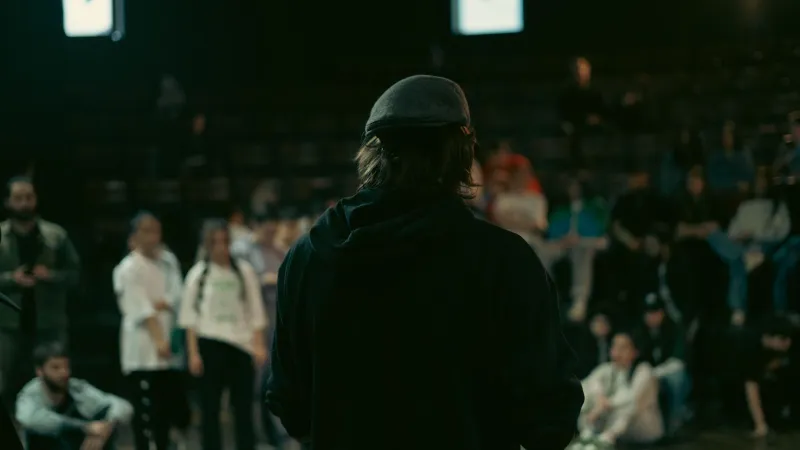
In the villages of the Prykarpattia region, there is an old understanding — one that predates modern theater theory by centuries — that a performance is not complete until the audience has become something more than an audience. The moment a communal gathering transforms strangers into witnesses, neighbors into participants, and shared silence into shared memory, something irreversible occurs. The community has, in the most precise sense of the word, been renewed.
This understanding is not nostalgia. It is architecture. And as the United States confronts what the U.S. Surgeon General has formally designated a loneliness epidemic, a quiet but consequential movement is emerging among American theater practitioners who believe that Carpathian performance traditions hold something their own culture has largely discarded.
The Epidemic Behind the Empty Seats
Before the pandemic reshaped public life, American theater was already grappling with declining attendance and a crisis of relevance. But the deeper problem was less visible than box office numbers. Sociologists and public health researchers had been documenting for years the erosion of what Robert Putnam famously called "social capital" — the dense networks of relationship, reciprocity, and trust that once characterized American civic life.
By 2023, Surgeon General Vivek Murthy had placed social disconnection on the same level of public health concern as smoking and obesity. Americans were spending more time alone, reporting fewer close friendships, and experiencing diminished senses of community belonging — even in dense urban environments.
Theater, in its commercial and institutional forms, had largely responded to this crisis by doubling down on spectacle: larger productions, more elaborate technology, celebrity casting. The implicit promise was that a sufficiently impressive event would draw people back. What it rarely offered was the experience of being genuinely gathered with others.
"We kept making the show better," says Marcus Delray, artistic director of a mid-sized regional theater in Asheville, North Carolina, who spent two weeks studying community performance practices in western Ukraine in 2022. "We were never asking whether 'the show' was even the right unit of meaning anymore."
What the Carpathians Understand About Gathering
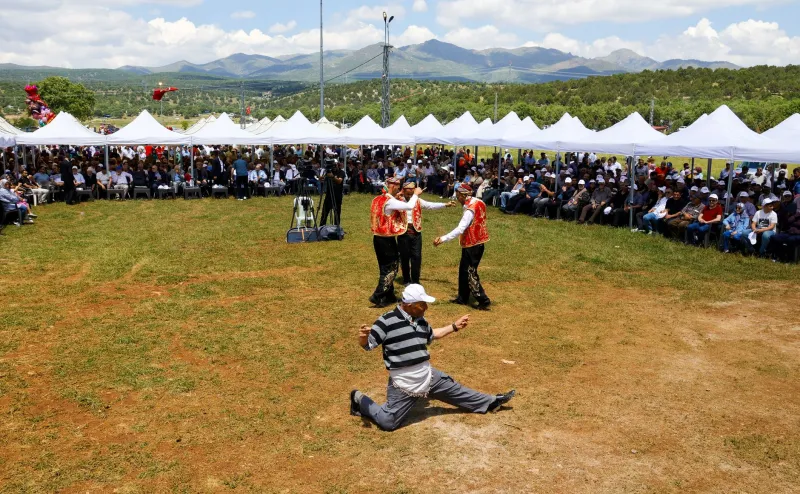
In the Prykarpattia region and the broader Carpathian cultural sphere, the relationship between performance and community is structured differently from the ground up. Theater did not originate there as a commercial enterprise requiring an audience to consume a product. It emerged from ritual — from seasonal observances, from collective storytelling around fire, from the dramatization of agricultural cycles and ancestral memory.
This origin shapes everything. The physical arrangement of performance spaces in traditional Carpathian practice is rarely strictly frontal. Performers and observers occupy shared space, and the boundary between them is understood to be permeable. Singing is expected from the crowd. Responses, interjections, and emotional displays are not interruptions — they are evidence that the ritual is working.
Equally significant is what happens before and after the performance itself. In many Carpathian communities, the gathering that surrounds a theatrical event — the shared meal, the walk to the venue, the conversation that lingers long after the final scene — is considered as essential as the performance. The event is not a product to be delivered and consumed. It is an occasion for the community to recognize itself.
"There is a phrase that gets used," says Dr. Olena Kovalchuk, a cultural anthropologist at the Ukrainian Catholic University who has consulted with several American theater organizations. "Roughly translated, it means: 'We came to see each other.' Not to see the play. To see each other, through the play."
American Practitioners Taking Notes
Delray's Asheville experiment began modestly. Inspired by his observations in Ukraine, he restructured one production cycle to include pre-performance communal dinners, post-show discussion circles, and a deliberate dismantling of the proscenium's psychological authority. Performers entered through the house. Audience members were seated at long tables rather than in rows.
"The first night, people didn't know what to do with themselves," he recalls. "By the third performance, people were arriving an hour early. They were bringing food to share. We hadn't asked them to. They just started doing it."
In Minneapolis, a theater collective called Threshold Works has gone further. Drawing explicitly on Carpathian ensemble traditions, the group has organized its season around what it calls "anchor events" — performances designed not as standalone productions but as recurring community gatherings tied to seasonal rhythms. Audience members are invited to return to the same material across multiple occasions, deepening their relationship with both the work and with each other.
"We stopped thinking of our audience as consumers and started thinking of them as a congregation," says Threshold Works co-founder Priya Nambiar. "That word makes some people uncomfortable. But what we mean is simply: a group of people who show up together, repeatedly, around something they hold in common."
The results have been striking. Threshold Works reports that a significant portion of its audience now attends four or more events per season — an almost unheard-of figure in contemporary American regional theater, where single-ticket buyers vastly outnumber subscribers.
The Design of Belonging
What distinguishes the Carpathian-inspired approach from mere audience engagement programming is its insistence on structural change rather than supplementary activity. It is not enough, practitioners argue, to add a talkback or a pre-show reception to a conventionally designed production. The performance itself must be conceived as a ritual act — one whose meaning is incomplete without the active, embodied presence of the community.
This has implications for everything: the selection of material, the configuration of space, the duration and pacing of events, and the role of the performer. In Carpathian tradition, the performer is not an elevated specialist delivering experience to passive recipients. The performer is a skilled member of the community who has taken on a particular responsibility within a shared act.
For American actors trained in a culture that prizes individual distinction and celebrity, this reorientation can be disorienting. But many who have engaged with Carpathian performance philosophy describe it as profoundly liberating.
"You stop performing for the audience and start performing with them," says Elena Vasquez, a New York-based actress who participated in a Carpathian performance workshop in 2023. "The pressure lifts. And something else comes in — something that actually feels like the reason you wanted to do this in the first place."
A Tradition With Something to Teach
It would be reductive to suggest that Carpathian theater offers a simple solution to a complex social crisis. Loneliness in America is structural, economic, and political in ways that no theatrical tradition can fully address. The collapse of civic institutions, the geography of suburban sprawl, the atomizing effects of digital life — these require responses at a scale beyond what any theater can provide.
But the Carpathian tradition does offer something that is genuinely scarce in American cultural life: a fully realized model of performance as communal practice rather than individual entertainment. It demonstrates, across centuries of unbroken tradition, that theater can function as the occasion for a community to gather, recognize itself, and renew its bonds.
In a country that has largely forgotten how to gather — that has outsourced belonging to algorithms and mistaken connectivity for connection — that model is not a relic. It is a resource.
The Carpathian mountains have long known what the American stage is only beginning to relearn: that the most powerful thing a performance can do is make the people in the room feel, unmistakably, that they are in the room together.