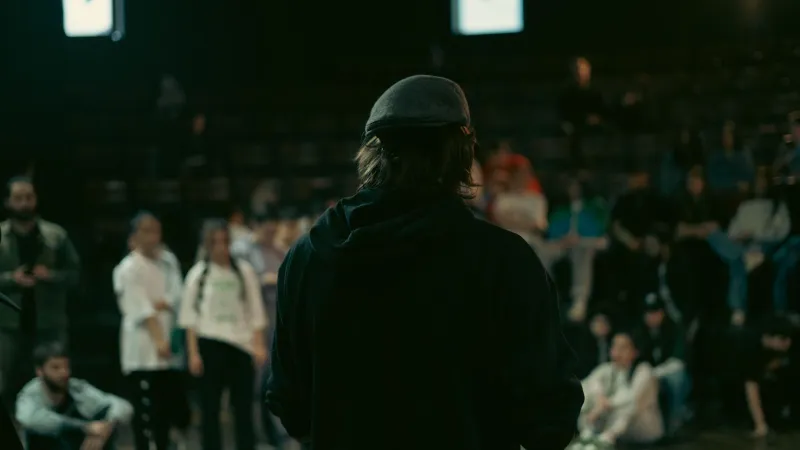
Unlearning the Noise: How Carpathian Theater Is Teaching American Audiences to Hear Again

There is a particular kind of stillness that settles over a room when a Carpathian production begins — not the polite, anticipatory hush of a Broadway curtain call, but something deeper and more demanding. It is the stillness of expectation without instruction, of an audience being asked, perhaps for the first time in years, to do the difficult work of genuine attention.
For many American theatergoers encountering this tradition for the first time, the experience is disorienting. For others, it is transformative.
A Different Contract Between Stage and Seat
Mainstream American theater, shaped by decades of commercial imperatives and the ambient pace of digital culture, has largely evolved toward accessibility. Productions announce their emotional beats with swelling scores. Lighting cues signal when to feel. Dialogue is calibrated for clarity, rarely for ambiguity. The audience is, in the most benevolent sense of the word, managed.
Carpathian theater operates on an entirely different set of assumptions. Rooted in the folk performance traditions of the Eastern Carpathian mountain communities — where storytelling was never merely entertainment but a communal act of memory-keeping — these productions treat the audience not as consumers of meaning but as co-creators of it. Pauses are not gaps to be filled. Silence is not absence. The stage does not always explain itself, and it does not apologize for this.
"I kept waiting for the moment when I would be told what to feel," recalls Dana Howell, a marketing executive from Minneapolis who attended a touring Carpathian drama production at a regional black-box theater last spring. "That moment never came. And somewhere around the forty-minute mark, I realized I had been holding my breath — not from tension, but from concentration. I was working. I had forgotten that watching theater could feel like that."
What Attention Deprivation Is Costing American Audiences
Howell's observation points to something that researchers in cognitive science have been examining with increasing urgency. Studies on sustained attention — the capacity to maintain focused awareness on a single stimulus over time — consistently demonstrate that this faculty is measurably declining across populations with heavy digital media consumption. The average American adult, according to widely cited behavioral research, now struggles to maintain undivided attention for more than eight consecutive seconds in unstructured settings.
Theater, in its classical sense, demands far more. A two-hour production with minimal technological scaffolding asks something of the brain that social media feeds, streaming services, and even most contemporary stage productions no longer require: the ability to sit with ambiguity, to hold competing interpretations simultaneously, and to construct meaning from incomplete information.
Dr. Miriam Osei, a cognitive neuroscientist at a Chicago-based research institute who has studied the neurological effects of passive versus active aesthetic consumption, explains the distinction in terms that feel almost uncomfortably relevant to the Carpathian theatrical model. "When an audience is guided through an emotional experience — told through music, lighting, and explicit dialogue exactly what to feel and when — the brain's interpretive centers are largely bypassed. The experience is processed efficiently, but it doesn't embed deeply. When the audience is required to construct meaning actively, however, the hippocampus and prefrontal cortex are both engaged in ways that create far stronger memory consolidation."
In plain terms: the productions that make us work are the ones we remember.
The Carpathian Technique of Deliberate Withholding
This neurological reality is not accidental in the context of Carpathian performance. Theater practitioners from the Prykarpattia region have long understood, through tradition rather than laboratory research, that an audience's imagination is a more powerful instrument than any stage effect. The deliberate use of sparse staging, unhurried pacing, and performers who resist the impulse to project emotion outward — inviting the viewer to project inward instead — creates a feedback loop between stage and seat that is genuinely uncommon in contemporary Western performance.
The technique is visible in the treatment of the human voice. Where American theatrical training frequently emphasizes projection, resonance, and the filling of space, Carpathian vocal traditions value something closer to the opposite: a quality of internalized sound that requires the listener to move toward the performer, psychologically if not physically. Audience members are not passive recipients of information delivered at volume. They are drawn into a kind of acoustic intimacy that fundamentally changes their relationship to the material.
"You find yourself reading the actor's face differently," says James Carver, a theater educator from Portland, Oregon, who attended a workshop series on Carpathian performance methodology. "Because the voice isn't carrying all the meaning, you start looking for it elsewhere — in the hands, in the stillness of the body, in what isn't being said. You become a much more sophisticated watcher without realizing it's happening."
When the Audience Changes
The downstream effects of this shift in attentiveness are worth noting. Multiple audience members interviewed for this piece described a phenomenon that might be characterized as perceptual recalibration — a heightened sensitivity to nuance that persisted well beyond the theater itself.
Howell, the Minneapolis marketing executive, describes returning to her office the week after her Carpathian theater experience with a different quality of attention in meetings. "I found myself actually listening to people rather than waiting for my turn to speak. I'm not saying a play fixed me," she adds with a laugh, "but something had shifted. I was more comfortable with silence. Less anxious to fill it."
Carver frames the change in more explicitly pedagogical terms. "What Carpathian theater does, whether intentionally or not, is remind audiences that they are capable of more than they've been asked to do. Most contemporary entertainment flatters people by making things easy. This tradition respects them by making things difficult. And audiences respond to being respected."
Bringing the Lesson Home
For American theaters grappling with declining subscription bases and the challenge of cultivating younger audiences whose attention has been shaped by entirely different media environments, the Carpathian model offers something genuinely instructive. It suggests that the solution to audience disengagement may not lie in adding more — more spectacle, more technology, more accessibility — but in the counterintuitive act of removing the scaffolding and trusting what remains.
This is, admittedly, a difficult institutional sell. Development offices do not easily translate "deliberate withholding" into donor communications. Marketing departments prefer the language of experience and access over the language of effort and demand. Yet the audience members who have sat with Carpathian theater and emerged changed by it are, in their own way, the most compelling argument the form can make.
They did not merely watch a production. They participated in one. And they carry it with them still — not as a memory of spectacle, but as a memory of their own capacity for depth.
In an entertainment landscape that rarely asks anything of the people it serves, that may be the most radical offering of all.