Lost in Translation, Lost in Culture: Why American Theaters Keep Mishandling Carpathian Works
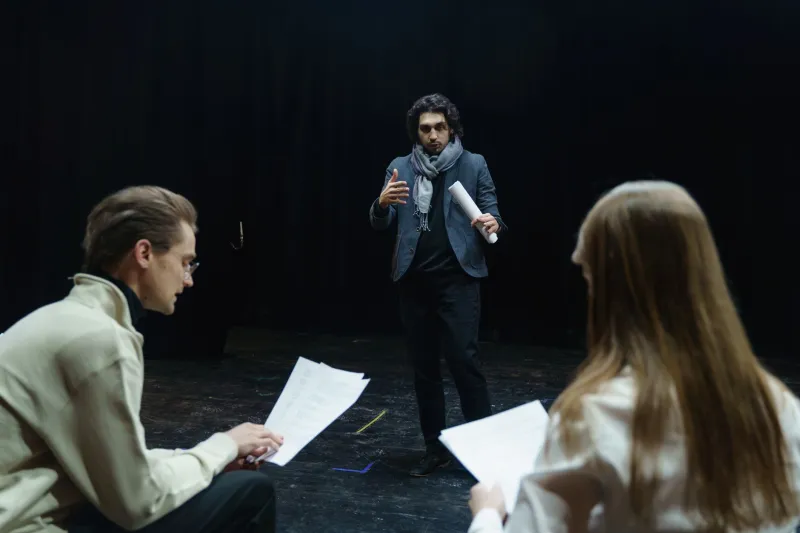
There is a particular kind of disappointment that Eastern European dramaturgs describe when they attend American productions of Carpathian theatrical works. It is not the disappointment of a minor detail overlooked or a dialect imperfectly rendered. It is something deeper—the recognition that a living cultural document has been hollowed out, its spiritual architecture quietly dismantled to make room for something more palatable to a mainstream audience.
This is the Carpathian question that American regional and institutional theaters have yet to honestly answer: How do you bring a work rooted in mountain ritual, collective memory, and centuries of suppressed identity onto a stage built for a culture that shares none of those reference points—without erasing what made the work worth staging in the first place?
The Licensing Gap Nobody Talks About
The problem frequently begins before a single rehearsal is called. When American theaters pursue adaptation rights to Carpathian plays, they often engage with licensing bodies or estates that are themselves operating at a cultural distance from the source material. Rights agreements may grant broad latitude to adapt, transpose, or otherwise reshape a text—language that seems standard in a Western theatrical context but can function as a kind of implicit permission to fundamentally alter the work.
Dramaturgs familiar with the Carpathian canon point to a recurring issue: American theaters frequently license a work without consulting anyone with direct knowledge of its cultural context. The licensing conversation becomes purely transactional, focused on fees and territory rather than on the interpretive responsibilities that should accompany production rights.
"There is an assumption that because the text has been translated, the work has been made accessible," says one Kyiv-based dramaturg who has served as a cultural consultant for several U.S. productions. "But translation is not transmission. The text arrives without its ecosystem—without the ritual calendar it references, without the specific grief it was written to hold, without the political silence it was designed to break."
When Mistranslation Becomes Misrepresentation
The translation question sits at the heart of nearly every failed Carpathian adaptation. The Hutsul and Lemko dialects that inform much of the region's dramatic literature carry embedded cultural logic that standard Ukrainian or Polish translations already partially obscure. By the time a work reaches English, it may have passed through two or three linguistic filters, each one softening an edge or flattening a metaphor that originally carried enormous weight.
Consider the treatment of ritual language—the incantatory passages that appear in folk-inflected Carpathian drama. These are not decorative flourishes. They are structural elements that signal a shift in theatrical register, moving the audience from narrative time into ceremonial time. When American translators encounter these passages, they often default to verse forms that feel familiar to English-speaking ears: iambic cadences, rhyming couplets, or free verse that prioritizes accessibility over accuracy. The result sounds poetic in English but functions entirely differently in performance.
Several dramaturgs interviewed for this piece described watching American directors cut or condense these ritual passages during previews because test audiences found them "slow" or "confusing." What those directors eliminated, in practical terms, was the spiritual grammar of the play—the mechanism by which a Carpathian drama distinguishes between the world of the living and the world of the dead, between personal grief and communal mourning.
The Westernization of Sacred Staging
Beyond the text, American productions consistently struggle with the staging of ritual elements. Carpathian theater draws heavily on pre-Christian ceremonial traditions—fire rites, processional movement, the symbolic use of embroidered textile and natural material. These are not theatrical devices in the conventional Western sense. They are inherited forms that carry meaning independent of any individual director's interpretation.
American directors, trained in traditions that prize conceptual autonomy and interpretive boldness, frequently treat these elements as raw material for their own aesthetic vision. The sacred fire becomes a design metaphor. The processional becomes a choreographic opportunity. The ritual garment becomes a costume choice. Each individual decision may be defensible on its own terms; collectively, they transform a work of cultural memory into a work of aesthetic pastiche.
"What troubles me is not that American directors have ideas," explains one Slovak theater scholar who has collaborated with U.S. institutions on Carpathian programming. "What troubles me is that they often have no idea what they are replacing. They see a space where something unfamiliar exists, and they fill it with something familiar. They do not realize the unfamiliar thing was load-bearing."
A Framework for Doing Better
The good news is that the problems outlined above are not intractable. They are, in most cases, the result of institutional habits that can be changed rather than malicious intent. Several Eastern European dramaturgs and scholars have articulated practical frameworks that American theaters could adopt without fundamentally altering their production models.
Engage cultural consultants at the rights stage, not the rehearsal stage. Before a licensing agreement is finalized, theaters should seek input from practitioners with direct knowledge of the source culture. This is not about gatekeeping; it is about informed consent to adapt.
Commission original translations rather than relying on existing ones. Where budget allows, a translation prepared specifically for a production—ideally by a translator working in close collaboration with a dramaturg from the source culture—will serve the work far better than a general-purpose text.
Distinguish between elements that are open to interpretation and elements that are not. Not everything in a Carpathian play is a directorial invitation. Ritual passages, ceremonial staging, and culturally specific symbolism should be approached with the same deference a director would give to a playwright's explicit stage directions.
Create genuine dramaturgy partnerships, not consultancy checkboxes. Too often, American theaters bring in an Eastern European dramaturg as a credentialing gesture—someone whose name appears in the program notes but whose voice carries little weight in the rehearsal room. Meaningful collaboration requires that cultural expertise have genuine authority in the production process.
Invest in audience education as a production value. American audiences are not inherently incapable of engaging with unfamiliar cultural material. They simply need context. Pre-show talks, program essays, and post-performance discussions led by practitioners from the source culture can transform an audience's relationship to challenging material without requiring the material itself to be simplified.
The Obligation That Comes With the Opportunity
American theater is, at its best, a place where the unfamiliar is made present and the distant is made near. The Carpathian dramatic tradition offers U.S. stages something genuinely rare: a body of work shaped by landscape, survival, spiritual depth, and a history of resistance that has never been adequately represented in the Western theatrical canon.
But that opportunity comes with an obligation. To stage a Carpathian work is to enter into a relationship with a culture that has spent centuries defending its right to exist on its own terms. The least American theaters can do is approach that relationship with the humility and rigor it deserves.
The Carpathian question is not a difficult one, once it is honestly asked. The difficulty lies in the asking.