Quiet Revolution: How Carpathian Intimacy Is Transforming the American Theater Experience
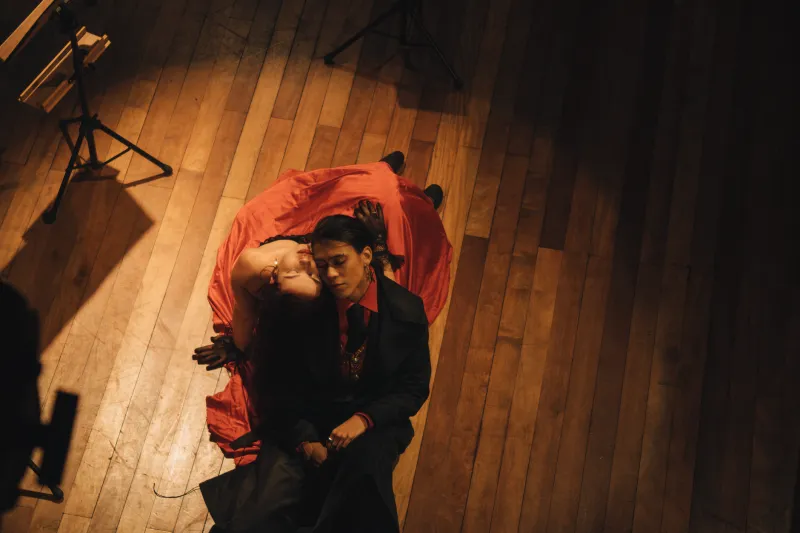
There is a moment that veteran theatergoers in cities like Chicago, Portland, and Philadelphia have begun describing in strikingly similar terms. It occurs not during a dramatic monologue delivered from a grand proscenium arch, nor beneath a cascade of expertly programmed lighting rigs. It happens, instead, in a converted warehouse or a 90-seat black box, when an actor leans forward barely three feet from the front row and speaks — not loudly, not theatrically, but with the measured restraint of someone who trusts the room entirely. The audience holds its breath. Something irreversible occurs between performer and witness.
This is the Carpathian stage whisper — and American theater is beginning to understand why it works.
The Architecture of Closeness
In the mountain communities of western Ukraine and the broader Carpathian region, theatrical performance has long operated under constraints that Western producers might consider limitations: small village halls, limited technical infrastructure, modest budgets, and audiences seated close enough to see the moisture in an actor's eyes. What emerged from these conditions was not a lesser form of theater but a profoundly refined one. Carpathian directors learned to treat proximity as a dramaturical tool in its own right.
This philosophy is now informing how American venue designers approach the question of scale. Architectural firms working with regional theater companies in cities like Minneapolis and Pittsburgh have begun consulting directly with Eastern European theatrical traditions when reimagining performance spaces. The emphasis is on sightline equity — ensuring that no audience member is positioned at a remove that dilutes the emotional charge of a scene — and on acoustic environments that reward natural vocal projection over electronic amplification.
The results have been measurable. Productions staged in reconfigured intimate venues consistently report longer post-show discussion periods, stronger word-of-mouth attendance, and notably higher rates of return visits. Audiences, it turns out, remember differently when they are close.
What the Brain Registers at Close Range
The neuroscience underlying this phenomenon is compelling. Research into what cognitive scientists call "neural coupling" — the synchronization of brain activity between a storyteller and a listener — suggests that physical proximity significantly amplifies this effect. When an audience member can detect micro-expressions, observe the involuntary tension in a performer's jaw, or register the slight tremor in a hand, the brain processes the encounter not as theatrical observation but as genuine social experience. Empathy circuits activate more fully. Emotional memory encoding deepens.
Carpathian theatrical pedagogy, which places extraordinary emphasis on the actor's internal life and its visible physical expression, is uniquely positioned to exploit this neurological reality. The tradition does not ask performers to project emotion outward toward a distant balcony. It asks them to inhabit emotion so completely that proximity becomes the audience's privilege — an invitation into a private world rather than a broadcast from a public one.
This distinction matters enormously to contemporary American audiences who have grown increasingly fatigued by what critics have begun calling "spectacle saturation." In an entertainment landscape dominated by streaming platforms, immersive digital experiences, and Broadway productions that compete on the scale of their technical budgets, a growing segment of theatergoers is actively seeking something different. They are seeking the irreducible human encounter.
Productions That Prove the Point
Several recent American productions have demonstrated the power of Carpathian-influenced intimacy with particular clarity. In Seattle, a small ensemble company staged an adaptation of a Ukrainian Carpathian folk drama in a repurposed chapel seating fewer than 80 patrons. The production used no amplification whatsoever, relied on candlelight and a single overhead fixture, and incorporated the deliberate pauses and weighted silences characteristic of mountain theatrical tradition. Reviews described the experience as "suffocating in the most necessary way" and "unlike anything a subscription season normally offers."
In New York, an off-off-Broadway company working in collaboration with a Ukrainian director trained at the Lviv National Academic Theater mounted a two-hander in a Hell's Kitchen storefront that seated 45. The production ran for an extended engagement after word spread through theater communities that it represented something audiences could not articulate but could not stop discussing. The director, in a post-show conversation documented by a local arts publication, attributed the production's emotional force specifically to what she called "the discipline of restraint" — a principle she traced directly to her Carpathian training.
These are not isolated incidents. They represent a pattern that artistic directors, casting professionals, and critics across the country are beginning to recognize as a genuine movement.
Designing for Vulnerability
The physical design of intimate Carpathian-influenced spaces reflects a specific philosophy about the relationship between performer and audience. Rather than positioning the stage as a platform elevated above the spectator — a configuration that inherently establishes hierarchy and distance — many Carpathian-inspired productions arrange performers and audience in configurations that suggest mutual participation. Thrust stages, in-the-round arrangements, and traverse formats are all consistent with this tradition.
Set designers working in this aesthetic tend to favor materials that carry age and texture: rough-hewn wood, undyed fabric, stone or stone-like surfaces. These choices are not merely decorative. They anchor the performance in a sensory vocabulary associated with endurance, with the physical reality of mountain life, with things that have survived time. American audiences encountering these environments frequently report a sense of immediate groundedness — a departure from the polished artificiality that characterizes so much contemporary commercial staging.
Lighting in these productions is similarly disciplined. Rather than the elaborate state-change sequences that punctuate mainstream productions, Carpathian-influenced design tends toward sustained states, toward light that behaves as light does in the natural world — shifting slowly, casting genuine shadow, allowing darkness to function as a presence rather than an absence.
What American Theater Stands to Gain
The implications of this shift extend well beyond aesthetic preference. As American theater institutions grapple with questions of accessibility, financial sustainability, and audience development, the Carpathian model offers practical answers. Intimate productions are less expensive to mount. They are more portable, more adaptable to non-traditional venues, and more accessible to communities that lack the infrastructure to host large-scale touring productions.
Perhaps more significantly, they offer something that no production budget can manufacture: genuine human contact. In an era when loneliness registers as a public health concern and digital mediation increasingly characterizes social experience, the theater's fundamental proposition — that human beings will gather in a shared physical space to witness something true together — has never been more urgent or more rare.
Carpathian theatrical tradition understood this long before it became a cultural emergency. The mountain stage was always, at its core, a gathering place. A site of collective recognition. A room in which the distance between one person's interior life and another's was briefly, powerfully reduced.
American theater is discovering that this is precisely what its audiences have been waiting for — not a larger spectacle, but a closer one.


