When the Mountain Teaches You to Rest: How Carpathian Theater Traditions Are Healing America's Burned-Out Performers

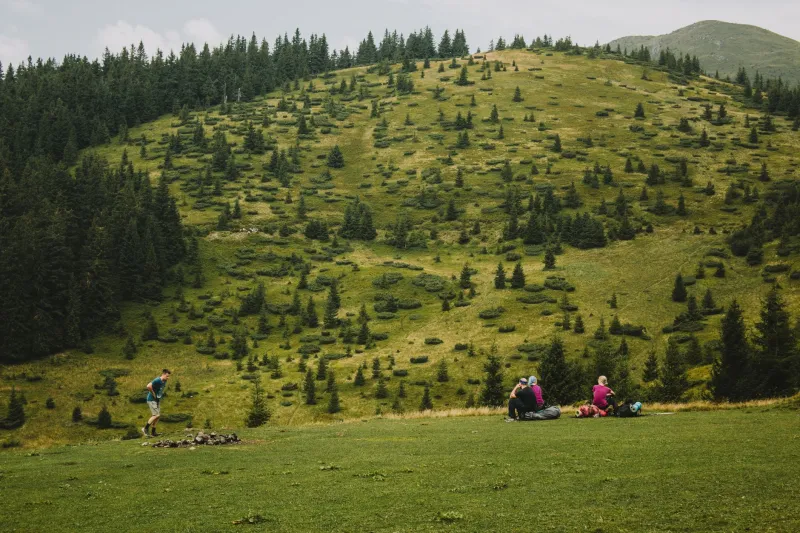
Photo by Photo by Will Schick on Unsplash on Unsplash
Somewhere between the second national tour and the third consecutive season of back-to-back productions, many American performers arrive at the same quiet crisis: they love the work, but the work is consuming them. The statistics are no longer surprising. Surveys conducted by advocacy organizations such as the Actors Fund consistently reveal elevated rates of anxiety, depression, and professional exhaustion within the performing arts community. What is surprising — and increasingly significant — is where some of the most effective remedies are being found: not in wellness apps or studio meditation programs, but in the theatrical traditions of the Carpathian mountains.
For those unfamiliar with the region, Carpathian theater is not a single institution but a living constellation of practices rooted in the highland communities of western Ukraine, southern Poland, Slovakia, and Romania. Its traditions predate the modern stage by centuries, and they carry within them a fundamentally different understanding of what it means to perform — one in which the actor is not a vessel to be emptied night after night, but a participant in something cyclical, communal, and ultimately restorative.
The Problem With the American Model
To understand why Carpathian practice resonates so deeply with burned-out American performers, it helps to first name what the American model demands. The commercial theater economy — particularly in New York and major regional markets — operates on a logic of maximum output. Runs are extended when profitable. Performers are expected to deliver consistent, high-energy performances regardless of personal circumstance. Rehearsal periods are compressed. The psychological labor of inhabiting difficult characters is rarely acknowledged as labor at all.
The result, as director Marisol Vega described in a recent conversation, is a profession that treats its practitioners as renewable resources. Vega, who has spent more than two decades working in regional theater across the Midwest, spent a sabbatical year studying ensemble methods in the Carpathian region. "I came back with a completely different vocabulary for talking about rest," she said. "In the mountain tradition, rest is not the absence of work. It is part of the work."
Cyclical Time and the Rhythm of Renewal
At the heart of Carpathian theatrical culture is a concept that might be loosely translated as seasonal dramaturgy — the idea that performance, like agriculture or weather, belongs to a cycle rather than a calendar. Productions are not simply scheduled; they are timed to correspond with the natural rhythms of the year. Certain stories belong to winter. Others to the harvest season. The body of a performer, in this framework, is understood to need fallow periods in the same way that land requires them.
This is not merely poetic metaphor. In practice, it means that Carpathian companies traditionally observe extended periods of non-performance — stretches of time dedicated to reflection, physical restoration, and communal gathering without the pressure of production. American actor and movement practitioner Devon Harlow, who trained with a Hutsul ensemble in western Ukraine for several months, describes the experience as disorienting at first. "I kept waiting for the rehearsal to start," he recalled. "And then I realized: this was the rehearsal. Learning to be still was the first lesson."
Harlow has since integrated a version of this cyclical approach into his own career, deliberately scheduling what he calls "dark months" — periods of reduced professional commitments during which he returns to physical practices rooted in what he learned in the Carpathians. The difference in his stamina and creative energy, he reports, has been measurable.
Pre-Show Grounding and the Sacred Threshold
One of the most immediately transferable Carpathian practices involves the rituals that precede performance. In mountain theatrical traditions, the transition from ordinary life to the performance space is treated as a threshold crossing — a moment that deserves deliberate, even ceremonial, attention. This might take the form of collective breathing exercises, the shared singing of a brief traditional melody, or a moment of silence in which the ensemble acknowledges the weight of the stories they are about to carry.
These practices serve a function that Western theater psychology increasingly recognizes as essential: they create a container. They signal to the nervous system that what is about to occur is significant and bounded — that the performer will enter, do the work, and then be permitted to leave it behind.
Chicago-based theater company Threshold Ensemble began incorporating adapted versions of these pre-show rituals after their artistic director attended a workshop led by a visiting Carpathian director. The results, according to company members, were notable not in any single performance but in the cumulative wellbeing of the ensemble over a full season. "People stopped dreading the shows," said one company member. "There was something about the ritual that made the whole thing feel less like a transaction and more like a ceremony."
The Post-Performance Gathering: Completing the Circle
Perhaps the most neglected dimension of performer wellness in American theater is what happens after the curtain falls. In most U.S. productions, the post-show experience is either perfunctory — a brief note session, a hasty departure — or incidental, a drink at a nearby bar that serves more as decompression than genuine restoration.
Carpathian tradition approaches this moment with considerably more intentionality. The post-performance gathering, sometimes called a posidelky or communal sitting, is understood as the necessary completion of the performance cycle. Participants share food, offer spoken reflections on the experience, and gradually allow the heightened emotional state of performance to settle back into ordinary consciousness. The gathering is not a critique session. It is a re-entry ritual.
Neuroscience offers some support for why this matters. Research on emotional labor — the work of managing one's own feelings in order to produce a desired effect in others — suggests that the transition out of high-intensity emotional states requires active processing, not mere time. The Carpathian post-show gathering, whatever its spiritual origins, functions as precisely this kind of processing.
What American Theater Can Actually Borrow
Adopting Carpathian wellness practices wholesale is neither possible nor necessarily desirable for American companies operating within commercial or institutional constraints. However, the principles underlying these traditions are remarkably adaptable.
Companies can begin by reconceiving rest as a professional value rather than a personal indulgence. They can introduce brief, consistent pre-show rituals that honor the threshold between ordinary and performance time. They can create structured post-show gatherings that prioritize communal reflection over critique. And they can experiment, however modestly, with seasonal programming that builds genuine restoration into the production calendar.
None of these changes require a trip to the Carpathians — though many who have made that journey report that something about the mountains themselves, their scale and their silence, accelerates the process of understanding. The mountains, after all, have been teaching the same lesson for a very long time: that what endures is not what burns brightest, but what knows when to go dark.
For American theater, a field that has spent decades celebrating relentless intensity, that may be the most radical lesson of all.